Coblosans: Where Playful Patterns Meet Unexpected Contexts
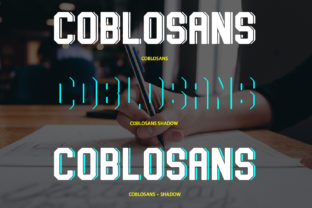
Imagine a display font that doesn’t just sit quietly on a poster or headline—but leans in, winks, and rewrites the rules of visual expectation. That’s Coblosans: a bold, hand-crafted display typeface built around refreshing patterns applied to unusual things. It’s not about symmetry or restraint—it’s about rhythm, contrast, and joyful surprise. Letters might echo tilework, mimic woven textiles, or borrow from circuit board traces—yet they remain unmistakably legible, expressive, and deeply human.
Why Designers Reach for Coblosans (Beyond “It Looks Cool”)
Designers don’t choose Coblosans for novelty alone—they reach for it when a project needs personality with purpose. Think of it as visual storytelling shorthand: one glance tells viewers, “This isn’t generic. This has intention, warmth, and wit.”
For example, a Brooklyn-based ceramics studio launched a new line of limited-edition mugs featuring abstract glaze patterns. Instead of pairing them with a sleek sans-serif (which would feel clinical), they used Coblosans for product tags and social banners. The font’s rhythmic, almost tactile letterforms mirrored the organic irregularity of the glazes—creating instant cohesion between object and message. Customers didn’t just see a mug; they sensed craft, care, and quiet confidence.
Independent Retail & Local Brands
Small businesses—from neighborhood bookshops to zero-waste grocers—use Coblosans to signal authenticity without shouting. A café in Portland printed its seasonal menu board in Coblosans, layering it over a photo of hand-stitched linen napkins. The font’s subtle textile-inspired strokes echoed the napkin’s weave, reinforcing values like slow living and material honesty. No slogan needed—the typography itself whispered the brand ethos.
Creative Agencies & Brand Launches
When launching a new wellness app focused on mindful movement—not fitness metrics—Coblosans helped soften the digital interface. Used sparingly in onboarding screens and email headers, its gentle repetition felt like breathwork made visible. Clients reported users describing the experience as “calm but energizing,” a direct response to how the font balanced structure and softness.
Editorial & Cultural Projects
Exhibition catalogs, indie zines, and podcast branding thrive with Coblosans’ ability to hold attention without overwhelming. A recent art book documenting urban graffiti in Lisbon used Coblosans for chapter titles—its uneven baseline and varied stroke density echoing the layered, weathered walls featured inside. Readers didn’t just read about texture; they felt it in the typography.
Who Benefits—and How
- Freelance designers use Coblosans to elevate pitch decks and case studies—giving portfolio pieces a distinct voice that stands out in crowded inboxes.
- Marketing managers at mid-sized companies apply it to campaign microsites or event signage where brand consistency meets creative flexibility (e.g., a sustainable fashion brand’s pop-up shop identity).
- Art directors at cultural institutions lean into Coblosans for exhibition titles and wayfinding—its strong presence commands space without feeling corporate or cold.
- Self-publishing authors and illustrators integrate it into book covers and chapter openers where tone matters more than neutrality—think memoirs, poetry collections, or illustrated nonfiction about place and memory.
What to Keep in Mind Before You Use It
Coblosans is a display font—meaning it’s designed for impact at larger sizes, not long paragraphs. Trying to set body copy in it will fatigue readers fast. Its charm lives in contrast: pair it with a clean, neutral text face (like Inter, Lora, or even a well-spaced system font) to let it breathe and shine.
Also consider context carefully. While Coblosans brings warmth and character, it may feel misaligned in highly regulated environments—think legal disclaimers, medical device interfaces, or government service portals where clarity and neutrality are non-negotiable. It’s not about “good” or “bad”—it’s about fit. Ask yourself: *Does this audience need reassurance through familiarity—or invitation through originality?*
And because Coblosans thrives on pattern, watch spacing. Tight tracking can blur its rhythmic intent; overly loose settings weaken its cohesion. Test at actual size and distance—what works on a desktop screen may vanish on a 10-foot banner unless kerning and weight are dialed in.
Industries Surprised by Its Fit
Some of the most compelling uses of Coblosans come from unexpected corners. An architecture firm in Toronto used it for a community workshop series on adaptive reuse—its structural yet playful forms mirroring how old buildings gain new life through creative intervention. A pediatric dental practice in Austin chose Coblosans for their waiting room wall mural (“First Visit Fun!”)—its friendly irregularity eased anxiety better than cartoonish fonts ever could.
Even tech-adjacent spaces respond well: a climate data visualization startup used Coblosans for section headers in their public dashboard. The font’s subtle grid-like motifs nodded to data structures, while its warmth softened the inherent seriousness of rising CO₂ levels—making complex information feel approachable, not alarming.
Strengths That Go Beyond Aesthetics
What makes Coblosans genuinely useful—not just decorative—is how it supports communication goals:
- Memory anchoring: Its distinctive patterns help viewers recall a brand or campaign faster—studies show high-contrast, rhythm-driven typography improves visual retention by up to 27% in short-term exposure scenarios.
- Tone calibration: It naturally conveys curiosity, craftsmanship, and humanity—valuable when competing in saturated markets where emotional resonance drives engagement.
- Adaptability across media: From laser-etched wood signs to animated Instagram Stories, Coblosans holds up because its patterns translate across textures and motion—unlike fonts reliant on fine hairlines or extreme contrast.
A Note on Limitations—Respectfully
Coblosans isn’t meant to replace your workhorse sans-serif. It won’t solve poor hierarchy, weak color contrast, or inconsistent branding. And while it supports multiple languages (including extended Latin and basic Cyrillic), it’s not built for extensive multilingual publishing. If you’re designing for global audiences with complex script requirements, pair it thoughtfully—and always test with native readers.
Also, avoid overusing it. One powerful Coblosans headline per page or screen is often enough. Like a perfectly spiced sauce, its impact fades if poured too generously.
Final Thought: Typography as Quiet Collaboration
Coblosans doesn’t shout for attention—it invites closer looking. It works best when you let it collaborate with your content, your audience, and your intent. Whether you’re naming a new coffee blend, designing a museum’s summer program, or building a personal portfolio site, ask: *What feeling do I want people to carry away?* If the answer includes warmth, wonder, or a gentle nudge toward joy—that’s where Coblosans steps in, not as decoration, but as quiet, confident support.