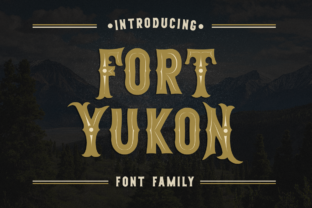
Fort Yukon: Bold Vintage Typography
Fort Yukon isn’t just another font—it’s a carefully crafted vintage typeface that brings authenticity and character to any design. With 14 distinct styles—including weights from thin to black, plus matching italics—this family offers real flexibility while staying true to its retro roots. Whether you’re crafting a café menu, designing a podcast logo, or building a small business website, Fort Yukon delivers presence without pretension.
What Makes Fort Yukon Stand Out?
At its core, Fort Yukon is a bold, authentic vintage font family inspired by mid-century American signage, letterpress posters, and hand-painted shop fronts. Its letterforms feature subtle irregularities, gentle contrast, and confident geometry—not sterile perfection, but warm, human-made charm. That’s why it feels grounded and trustworthy, not gimmicky or dated.
Each of the 14 styles was designed to work together harmoniously. You can pair a sturdy Bold for headlines with a refined Light Italic for body text—or go all-in with the Black weight for a striking poster title. Unlike many “retro” fonts that rely on heavy distressing or forced quirks, Fort Yukon earns its vintage feel through thoughtful construction and historical awareness.
Who Benefits Most From Using Fort Yukon?
Creatives who value clarity *and* personality often reach for Fort Yukon first. Bloggers use it to give their headers a memorable voice. Small business owners apply it to packaging and social media graphics to stand out in crowded feeds. Educators incorporate it into classroom posters to spark curiosity without overwhelming students. Even freelancers building client websites choose it when the brand calls for sincerity, craftsmanship, or local character.
It’s especially helpful if you’ve ever felt stuck between “too modern” and “too kitschy.” Fort Yukon bridges that gap. It doesn’t shout—but it holds your attention. It doesn’t imitate history; it honors it with intention.
Real-World Uses You Can Try Today
- Local business branding: A neighborhood bakery might use Fort Yukon Bold for its storefront sign and Light Italic for ingredient lists on chalkboard-style menus.
- Digital storytelling: A travel blogger documenting Alaskan road trips could set article titles in Fort Yukon Black and keep body copy in a clean sans-serif—creating visual rhythm and regional resonance.
- Educational materials: History teachers designing timeline handouts or museum-style exhibit cards find that Fort Yukon adds gravitas without sacrificing readability.
- Printed goods: Wedding invitations, concert posters, and zine covers gain instant texture and warmth using just two weights from the family—no extra effects needed.
Why This Font Fits So Many Goals
Design isn’t just about aesthetics—it’s about communication. Fort Yukon supports goals like building trust, evoking place, honoring tradition, or signaling independence. Its boldness makes content feel intentional; its vintage tone invites pause and connection. For entrepreneurs launching a craft-based product line, that sense of authenticity matters more than trendiness.
It also works well across devices. Because its proportions and spacing were tested at multiple sizes, Fort Yukon remains legible in mobile banners, email headers, and even embroidered patches. That versatility saves time—you won’t need separate fonts for web and print.
Things to Keep in Mind Before You Use It
While Fort Yukon shines in expressive contexts, it’s not ideal for long-form reading like novels or dense reports. Its strong personality works best where emphasis and identity matter most—headlines, logos, callouts, and short-form visuals. Think of it as your design’s handshake: firm, memorable, and full of character.
Also consider pairing wisely. Since Fort Yukon carries so much visual weight, balance it with simpler, neutral fonts (like a friendly sans-serif or a modest serif) for supporting text. Avoid stacking multiple decorative fonts—that dilutes impact and confuses hierarchy.
And remember: licensing matters. Fort Yukon is a professional type family, so make sure your usage aligns with its license—especially if you’re embedding it in apps, selling templates, or using it commercially. Most licenses cover desktop, web, and app use, but always double-check the terms before launching.
A Font That Grows With Your Projects
One of the quiet strengths of Fort Yukon is how it adapts—not by changing its nature, but by revealing new possibilities as your skills grow. Beginners love its immediate impact: drop it into a Canva template or Figma mockup, and suddenly the layout feels more considered. Seasoned designers appreciate its nuanced spacing, OpenType features (like alternate characters and ligatures), and how gracefully it scales from favicon size to billboard height.
You don’t need advanced typography knowledge to start. Try this: open your next presentation or social post draft, swap the default header font for Fort Yukon Bold, and adjust the tracking slightly tighter. Notice how the message gains authority—not because it’s louder, but because it feels more deliberately placed in the world.
When Authenticity Is the Goal, Fort Yukon Delivers
In an age of algorithm-driven templates and AI-generated visuals, choosing a font like Fort Yukon is a small but meaningful act of intention. It says you care about tone, context, and craft—not just speed or scale. Whether you're naming a new podcast, relaunching a family recipe blog, or designing signage for a community garden, Fort Yukon helps your work feel rooted, respectful, and quietly confident.
It doesn’t try to be everything. It knows what it is—and does it well.