Gorsifa: A Grungy Display Font with Bold Personality
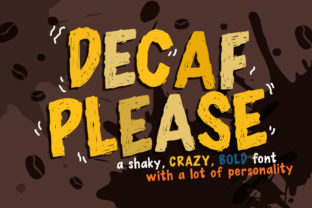
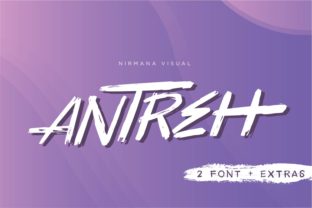
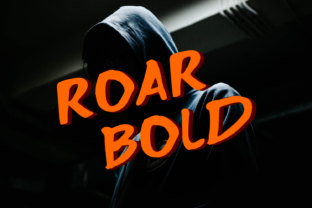
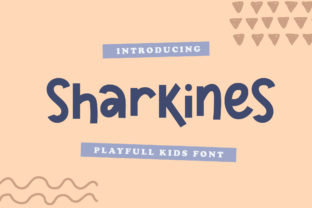
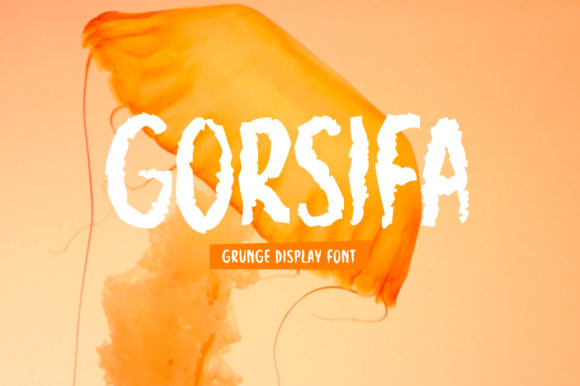
Gorsifa stands out in the crowded landscape of display typefaces—not by chasing trends, but by committing fully to its own character. It’s a grungy, high-contrast sans serif designed for impact, not subtlety. Unlike many display fonts that lean into retro pastiche or digital distortion as stylistic shortcuts, Gorsifa builds its identity through deliberate weight distribution, uneven terminals, and subtle irregularities in stroke width. These aren’t flaws; they’re intentional cues that signal authenticity, energy, and tactile presence.
What Gorsifa Does Well—And Where It Fits
Gorsifa excels where visual tone matters more than neutrality: album art, event posters, limited-edition packaging, editorial headlines, and brand identities seeking edge without sacrificing legibility at scale. Its bold feel emerges from dense black letterforms paired with tight spacing and compact proportions—not just from increased weight. That density gives it staying power in small-format applications like social media banners or app splash screens, where thinner or more ornate display fonts often blur or lose definition.
It’s not built for body text. Nor is it meant for interfaces requiring rapid scanning or accessibility-first readability. But that’s by design. Gorsifa operates in the realm of *impression*, not information delivery. When used intentionally—as a headline over clean, highly legible supporting text—it creates contrast that feels earned, not jarring.
Key Characteristics That Shape Its Use
- Grungy texture without noise: The font includes slight variations in stroke endings and minor asymmetries in curves, but avoids excessive distressing or simulated wear. This makes it versatile across print and screen while retaining organic character.
- Bold, grounded structure: Capitals sit low on the baseline, x-height is generous, and descenders are restrained—giving words a stable, anchored appearance even at large sizes.
- Limited but purposeful glyph set: Standard Latin characters, numerals, and basic punctuation are included. No extended diacritics or multilingual support—so it suits English-dominant projects with concise messaging.
- Single weight, no italics: Gorsifa ships as one robust weight. There’s no light or medium variant, nor an italic companion. This simplifies pairing decisions but requires thoughtful typographic hierarchy planning.
Real-World Performance: What Holds Up (and What Doesn’t)
In practice, Gorsifa holds up best when deployed sparingly and contextually. A local coffee roaster used it for their “Small Batch Roast” label—paired with a neutral sans serif for origin details—and saw improved shelf standout without alienating their core audience. Similarly, an indie music festival applied Gorsifa to stage signage and poster headlines, finding it reinforced their DIY ethos while remaining distinct from generic “grunge” fonts that feel dated or overly aggressive.
Where it stumbles is in environments demanding scalability or flexibility. At under 36px on web, letter spacing tightens perceptibly, and counters (like inside the ‘e’ or ‘a’) begin to fill visually. On low-resolution screens or older printers, fine details can merge—so testing output across devices remains essential. Also, because it lacks OpenType features like stylistic alternates or ligatures, designers who rely on those tools for refinement will need to adjust manually.
Who Benefits Most—and Why
Gorsifa serves creators who prioritize voice over versatility. Freelance designers building brand identities for emerging artists, streetwear labels, or underground publications often find it valuable—not as a full system, but as a signature anchor. Educators teaching typography or branding may use it to illustrate how controlled irregularity supports memorability. Small business owners launching a product line with strong aesthetic intent (think craft beer, vinyl pressings, or zine publishing) appreciate its ability to telegraph attitude without needing custom illustration.
It’s less suited for enterprise marketing teams managing global campaigns, SaaS platforms needing consistent UI typography, or publishers requiring multi-language support. Its strength lies in specificity, not breadth.
Pairing and Practical Integration
Gorsifa pairs most effectively with typefaces that provide structural counterbalance: geometric sans serifs (like Inter or Manrope), neutral humanist options (such as Source Sans Pro), or even crisp monospaced fonts for contrast in editorial layouts. Avoid pairing it with other display fonts—even complementary ones—as the visual competition dilutes impact.
When setting headlines, consider increasing letter spacing slightly (5–10% tracking) to let individual forms breathe. For web use, serve it via Google Fonts or self-host with modern @font-face declarations including font-display: swap to prevent invisible text during load. Always define fallbacks—font-family: 'Gorsifa', -apple-system, BlinkMacSystemFont, 'Segoe UI', sans-serif; ensures graceful degradation.
Quality and Long-Term Value
The font’s construction reflects attention to rendering consistency across platforms. Kerning is tightly tuned for common two-letter combinations (‘To’, ‘We’, ‘Be’), and hinting is optimized for clarity on Windows and older Android devices. It’s not open source, but licensing is straightforward—typically a one-time purchase covering desktop, web, and app use for a single entity. That model supports sustainability for the designer while offering predictability for users.
Long-term, Gorsifa avoids trend dependency. Its grunge isn’t tied to a specific decade’s aesthetic—it draws from broader principles of expressive letterpress and analog sign painting. That gives it staying power beyond seasonal design cycles. You won’t see it everywhere, and that’s part of its utility: it retains distinction because it’s chosen deliberately, not defaults.
Limitations Worth Acknowledging
No font solves every problem—and Gorsifa doesn’t try to. Its lack of optical sizing means it performs less consistently across extreme sizes (under 24px or over 120px). It offers no variable axis, so responsive weight shifts require manual intervention. And while its grunge is tasteful, it still carries connotations of rebellion or informality—making it unsuitable for legal disclaimers, healthcare communications, or financial reporting where trust and clarity are paramount.
Also, because it’s relatively new (released in late 2022), community resources—tutorials, CSS snippets, or Figma plugins—are still emerging. Users should expect to invest modest time in testing and fine-tuning rather than relying on plug-and-play presets.
Making the Call: Is Gorsifa Right for Your Project?
Ask yourself three questions before choosing Gorsifa:
- Does the project benefit from a strong, singular typographic voice—not just visual decoration?
- Is the message short, declarative, and intended to resonate emotionally or culturally rather than instruct or explain?
- Do you have control over supporting typography, color, and layout to give Gorsifa room to function as a focal point—not a filler?
If the answer is yes to all three, Gorsifa earns its place. It won’t streamline every workflow, but it reliably delivers presence, personality, and cohesion where those qualities matter most. Used with intention—not as ornament, but as statement—it becomes more than a font. It becomes part of the story.