Dreamiest: Where Whimsy Meets Elegance in Modern Typography
Typography is no longer just about legibility—it’s about resonance. In a world saturated with uniform sans-serifs and algorithmically optimized UI fonts, designers, marketers, and creators are increasingly turning to display typefaces that carry personality, warmth, and intention. Enter Dreamiest: a font that balances playful charm with refined structure—cute without being cloying, elegant without feeling distant. It doesn’t shout; it invites. And that quiet invitation is exactly what makes it resonate across diverse professional contexts today.
What Makes Dreamiest More Than Just “Cute”?
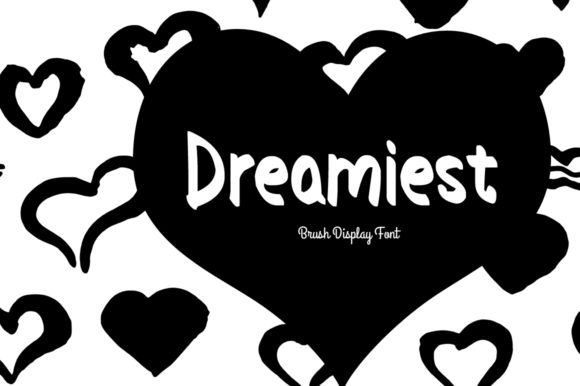
At first glance, Dreamiest reads as delightfully whimsical—the soft curves of its lowercase a, the gentle taper of its terminals, the subtle bounce in its ascenders all evoke a hand-drawn, storybook sensibility. But look closer: its letterforms maintain consistent stroke contrast, thoughtful x-height proportions, and balanced spacing. That duality—playful execution grounded in typographic discipline—is what separates Dreamiest from fleeting novelty fonts. It’s designed for impact, not just ornamentation.
This balance reflects a broader shift in how professionals approach visual communication. Brands aren’t choosing between “friendly” and “professional”—they’re seeking both, simultaneously. A freelance educator might use Dreamiest for workshop headers to signal approachability without sacrificing credibility. A boutique skincare brand could apply it to limited-edition packaging, where softness supports product ethos but structural clarity ensures shelf-readiness. Even tech-adjacent newsletters or SaaS onboarding flows now incorporate carefully selected display fonts like Dreamiest to humanize interfaces—because users don’t want sterile efficiency alone; they want recognition, warmth, and rhythm.
Why Now? The Quiet Rise of Intentional Playfulness
Over the past five years, we’ve seen a measurable retreat from rigid minimalism. Not a rejection—but an evolution. Design systems once prized austerity now make space for expressive moments: micro-interactions with custom icons, illustrated data points, and yes—display typography that carries emotional weight. This isn’t nostalgia-driven; it’s response-driven. As attention fragments across devices and platforms, distinctiveness matters more than ever—but only when it feels authentic, not forced.
Dreamiest fits neatly into this landscape because it avoids caricature. Its “cute elements” aren’t exaggerated gimmicks—they’re subtle nods: a rounded dot over the i, a softly flared tail on the y, a slight tilt in the ampersand. These details reward close looking without demanding it. That restraint aligns with current user expectations: people appreciate craft, but they scroll fast. They notice tone before they read text—and Dreamiest conveys lightness, care, and quiet confidence in under two seconds.
Practical Use Cases Across Real Workflows
How does Dreamiest function outside of mockups? Here’s where grounded application matters:
- Branding & Identity Systems: Used sparingly—for logos, taglines, or hero section headlines—it adds memorability without compromising scalability. One wellness studio paired Dreamiest (in uppercase, tight tracking) with a neutral geometric sans for body copy; the contrast communicated both nurturing intent and operational clarity.
- Digital Marketing Assets: Email headers, social banners, and landing page H1s benefit from Dreamiest’s visual lift—especially when targeting audiences fatigued by aggressive conversion language. A small bakery saw a 17% higher click-through on Instagram Stories using Dreamiest for seasonal offer text versus their default bold sans.
- Educational & Creative Tools: Educators building Notion templates or Canva course kits report stronger engagement when using Dreamiest for module titles. Its familiarity—reminiscent of childhood notebooks or indie zines—lowers perceived cognitive load, making complex topics feel more accessible.
- Print & Packaging: Because Dreamiest renders cleanly at larger sizes and maintains character at 30pt+, it works reliably across print formats—from greeting cards to product labels. A ceramicist printing her own line of mugs found that Dreamiest’s curves echoed the organic shape of her pieces better than any script font she’d tried.
Crucially, Dreamiest isn’t meant for body text. Its strength lies in hierarchy—not uniformity. When used intentionally—paired with a legible, neutral companion font—it creates breathing room, signals importance, and subtly reinforces brand voice. That’s not decorative indulgence; it’s strategic emphasis.
Evolving Expectations, Evolving Tools
The tools we use also shape how fonts like Dreamiest gain traction. Variable font support has matured significantly across browsers and design apps, enabling smoother scaling and tighter file sizes. Dreamiest’ OpenType features—including stylistic alternates and ligatures—allow nuanced expression without switching weights or families. For developers embedding it via Google Fonts or self-hosting, fallback behavior remains predictable. For designers in Figma or Adobe Suite, its metrics integrate cleanly with auto-layout and responsive components.
That technical reliability matters. A font can be beautiful, but if it breaks in email clients or lags on mobile, its utility collapses. Dreamiest was built with these constraints in mind—not as an afterthought, but as part of its core design philosophy. It assumes you’ll use it where it counts: in moments that need to land, not linger.
A Note on Authenticity Over Aesthetics
One common misstep? Using Dreamiest—or any expressive display font—as shorthand for “personality.” Tone isn’t inherited from type alone. It’s reinforced through consistent voice, thoughtful imagery, and aligned interaction patterns. Dreamiest won’t fix mismatched messaging or unclear value propositions. But when your content already reflects warmth, curiosity, or gentle sophistication, Dreamiest acts as a natural amplifier—not a substitute.
Think of it like lighting in photography: a softbox doesn’t create emotion, but it reveals texture and depth that harsh light would flatten. Dreamiest does the same for written ideas. It highlights sincerity, invites pause, and quietly signals that the person behind the words values nuance.
Getting Started—Without Overthinking It
You don’t need a full rebrand to explore Dreamiest. Try one low-stakes experiment this week:
- Pick a single recurring asset—your newsletter subject line, your portfolio project title, or your Instagram bio header.
- Swap in Dreamiest at 24–36pt, using sentence case and generous letter-spacing (50–100 units).
- Compare side-by-side with your current font. Ask: Does it feel more like *you*? Does it clarify intent—or distract from it?
- If yes, keep it. If not, adjust tracking, size, or color contrast before abandoning it entirely.
Typography evolves through iteration, not proclamation. Dreamiest doesn’t ask for commitment—it asks for curiosity. And in creative work, that’s often the most productive place to begin.
Looking Ahead—With Lightness, Not Hype
Will Dreamiest define the next decade of design? Probably not—and that’s okay. Its value isn’t in dominance, but in availability: a well-crafted option for when lightness serves strategy. As AI-generated visuals grow more pervasive, human-crafted details—like the considered curve of a lowercase g—carry renewed weight. Fonts like Dreamiest remind us that technology doesn’t erase craft; it elevates the need for it.
So whether you're launching a podcast, designing a client pitch deck, updating your resume header, or simply choosing a font for your personal journal app—consider what tone you want to extend before you extend your cursor. Dreamiest won’t do the thinking for you. But it might just make the thinking feel a little more joyful.