Jellyfish: A Whimsical Display Font That Brings Playful Clarity to Creative Projects
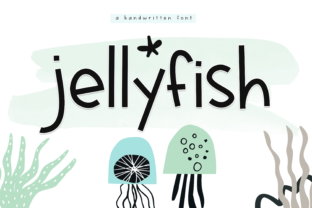
When you’re designing a brand identity, launching a children’s app, or crafting an invitation that needs to feel joyful and memorable, the right font does more than spell out words—it sets the emotional tone. Jellyfish is a display typeface designed with intention: it’s playful without being childish, bold without being overwhelming, and whimsical without sacrificing legibility. Built for impact at larger sizes, Jellyfish invites warmth, curiosity, and approachability—making it a practical choice for creatives who want their work to resonate emotionally while staying grounded in purpose.
Why Designers Reach for Jellyfish (and When They Should)
Many professionals face recurring creative challenges: how to stand out in a saturated digital space, how to signal authenticity and friendliness without seeming unpolished, or how to appeal to younger audiences—or adults who appreciate lighthearted sophistication. Jellyfish answers those questions not by trying to be everything, but by doing one thing exceptionally well: communicating joy with clarity.
Unlike decorative fonts that sacrifice function for flair, Jellyfish balances personality with structure. Its rounded terminals, gentle curves, and slightly uneven baseline evoke hand-drawn charm—but its consistent spacing, strong x-height, and open counters ensure readability even on screens and at smaller display sizes (down to ~36px). That makes it unusually versatile for a display font.
Solving Real Creative Needs with Jellyfish
Consider these common scenarios—and how Jellyfish helps deliver better outcomes:
- Brand refreshes seeking emotional connection: A wellness studio or eco-friendly toy company might struggle to convey care and playfulness simultaneously. Jellyfish used in logos, signage, or hero banners adds instant warmth—without requiring illustration or animation to achieve personality.
- Digital product interfaces needing human-centered tone: Onboarding screens, error messages, or feature highlights benefit from typography that softens technical friction. Pairing Jellyfish headlines with a clean sans-serif body font (like Inter or Open Sans) creates hierarchy that feels inviting—not intimidating.
- Print materials aiming for memorability: Event posters, packaging labels, or educational handouts often compete for attention in busy environments. Jellyfish’s distinct rhythm and friendly proportions help content land faster and linger longer in memory.
The key isn’t just using Jellyfish—but using it intentionally. It shines brightest when given room to breathe: as a headline, logo wordmark, chapter title, or callout. It’s not meant for paragraphs or dense UI text—and recognizing that boundary is part of using it effectively.
Practical Implementation Tips
Getting the most from Jellyfish starts with thoughtful pairing and context-aware usage:
- Pair wisely: Contrast is your ally. Combine Jellyfish with neutral, highly legible sans-serifs (e.g., Manrope, DM Sans, or Public Sans) for balance. Avoid other decorative or script fonts—they’ll compete rather than complement.
- Respect scale and spacing: Use Jellyfish at 48px and above for web headings; 24–36pt for print. Increase letter-spacing slightly (+20–40 units) to prevent visual crowding, especially in all-caps settings.
- Optimize for performance: As a variable font, Jellyfish supports weight and width axes. Load only the styles you need (e.g.,
font-weight: 500; font-stretch: 100%) to keep page speed high—critical for SEO and user experience. - Test across devices: Preview Jellyfish on mobile, tablet, and desktop. Its charm holds up well on retina displays, but avoid ultra-thin weights on low-resolution screens where detail can blur.
How Different Users Approach Jellyfish
A freelance designer building a portfolio site might use Jellyfish for section headers to reflect their creative voice—subtly signaling versatility and approachability to potential clients. An in-house marketing manager launching a back-to-school campaign could apply it to email subject lines and social banners, helping the message cut through algorithmic noise with recognizable warmth. Meanwhile, an educator designing classroom resources may choose Jellyfish for learning objectives or activity titles—reinforcing engagement without distracting from content.
What unites these users isn’t technical expertise, but shared intent: they want their communication to land. Jellyfish supports that goal by reducing the cognitive load of interpretation—its friendliness is immediate, intuitive, and inclusive.
What Jellyfish Is Not (and Why That Matters)
Jellyfish isn’t a utility font. It won’t replace your system UI typeface or serve as body copy in long-form articles. It’s also not “cute” in a cloying or dated way—its design avoids cartoon clichés (no winks, no exaggerated bounce) in favor of subtle, modern whimsy. That restraint is what gives it longevity and broad appeal.
It’s also not a one-size-fits-all solution for every playful project. If your brand voice leans toward irony, minimalism, or sharp wit, Jellyfish may soften your message more than intended. But if your goal is sincerity, accessibility, or intergenerational appeal—especially in spaces where trust and delight go hand-in-hand—Jellyfish becomes a strategic asset.
Final Thoughts: Let Jellyfish Do the Emotional Work
In a world where attention is scarce and authenticity is prized, typography remains one of the most accessible tools for shaping perception. Jellyfish doesn’t ask you to overcomplicate your process—it asks you to clarify your intent first, then amplify it with charm that feels earned, not tacked on.
Whether you’re refining a brand guideline, prototyping a new app screen, or designing a community newsletter, consider where a moment of lightness could deepen connection. Jellyfish works best when treated not as decoration, but as intentional punctuation—a pause that says, “This matters, and so do you.”
Start small: try it on a single headline. Adjust tracking. Compare it beside your current go-to display font. Notice how the tone shifts—not dramatically, but meaningfully. That’s the quiet power of Jellyfish: it doesn’t shout. It smiles—and invites others to do the same.