Gabriel Childish: The Playful Display Font That Turns Heads—and Clicks
Fonts do more than spell out words. They set the tone, shape perception, and silently guide how people feel before they even read a single sentence. Among today’s vibrant landscape of display typefaces, Gabriel Childish stands out—not with loud gimmicks or over-engineered curves, but with an unmistakable, joyful confidence. It’s bold. It’s fun. And yes, it’s just a little mischievous.
What Makes Gabriel Childish Feel So Alive?
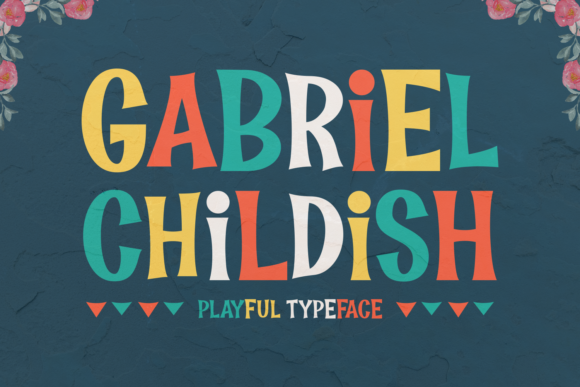
At first glance, Gabriel Childish looks like handwriting that’s been given permission to be exuberant—think chalk on a sunlit sidewalk, not ink on formal stationery. Its letterforms are generously spaced, with exaggerated ascenders and descenders that dance just beyond the expected boundaries. Rounded terminals, uneven stroke weights, and subtle irregularities give it organic energy—not sloppy, but spirited.
This isn’t a font designed for body text or long-form reading. Instead, Gabriel Childish thrives where impact matters most: headlines, logos, packaging, social media banners, and event posters. Its whimsical feel comes from intentional imperfection—a deliberate nod to human expression rather than digital precision. That’s why designers reach for it when they want authenticity to shine through without sacrificing clarity.
More Than Just “Cute”: A Strategic Design Choice
Calling Gabriel Childish “cute” undersells it. It’s versatile in tone—playful, yes, but also confident, inclusive, and refreshingly unpretentious. In branding, it signals approachability without diluting authority. A children’s book publisher might use it for a series title to evoke wonder; an indie coffee roaster could apply it to a seasonal blend label to suggest warmth and personality; a wellness app might deploy it sparingly in onboarding screens to soften digital friction.
Unlike many display fonts that lean heavily into nostalgia or irony, Gabriel Childish feels contemporary because it doesn’t try too hard. It avoids retro clichés (no distressed textures, no forced vintage serifs) and instead leans into clean, modern proportions—just with a wink. That balance makes it surprisingly adaptable across industries: education platforms, creative agencies, boutique retailers, and even tech startups building emotionally intelligent products.
Where Gabriel Childish Fits in Real-World Workflows
Integrating Gabriel Childish into your design process is refreshingly straightforward—especially if you’re already working within common tools like Figma, Adobe Creative Cloud, or Webflow. It’s available in standard OTF and WOFF2 formats, so web use is seamless with proper font loading and fallback strategies.
- For web designers: Pair Gabriel Childish with a neutral sans-serif (like Inter, Poppins, or even system fonts) for contrast that breathes. Use it at larger sizes—36px and up—for headings, and always test legibility on mobile. Its generous x-height helps maintain readability even at smaller breakpoints.
- For brand designers: Consider how Gabriel Childish behaves across touchpoints. Does it scale well on a tiny app icon? Does it retain charm in monochrome print? Test early—its personality shines brightest when given room to move.
- For marketers and content creators: This font works exceptionally well in short-form visual content. Think Instagram carousels, TikTok thumbnails, or email subject lines rendered as image headers. Its distinct silhouette grabs attention in crowded feeds—without needing animation or bright colors.
Practical Pairings That Elevate Gabriel Childish
Great typography is rarely about one font—it’s about harmony. Gabriel Childish pairs beautifully with typefaces that ground its energy. Here’s what works—and why:
- Inter or Open Sans — Clean, highly legible, and widely supported. Their geometric neutrality lets Gabriel Childish take center stage without competing.
- IBM Plex Sans or Source Sans Pro — Slightly warmer than Inter, these bring subtle character while keeping hierarchy crystal clear.
- Cardo or Lora (for editorial contexts) — If you're designing a magazine cover or literary festival poster, a gentle serif can add sophistication while letting Gabriel Childish deliver the spark.
Avoid pairing it with other high-contrast or decorative display fonts—unless you’re intentionally going for maximalist energy (and even then, restraint pays off). Two playful fonts often cancel each other out. Let Gabriel Childish lead. Let the rest support.
Why Designers Are Choosing Gabriel Childish Right Now
There’s a quiet shift happening in visual culture: audiences are responding more strongly to work that feels *human*. Algorithms reward engagement, and engagement spikes when something feels genuine—not polished to sterility. Gabriel Childish taps directly into that impulse. It doesn’t hide behind slickness. It invites connection.
Consider this: a bakery launching a new line of sourdough croissants could choose from dozens of elegant script fonts—but none would convey the same warmth and craft as Gabriel Childish does in a hand-drawn-style logo lockup. Or imagine a mental health podcast using it for episode titles: the font subtly signals empathy, openness, and care—qualities that resonate deeper than clinical precision.
It’s also lightweight in file size and renders consistently across devices. No heavy font stacks, no complex variable axes to manage—just one expressive, ready-to-deploy family that delivers personality on demand.
Things to Keep in Mind Before You Commit
Like any strong personality, Gabriel Childish deserves thoughtful application. Ask yourself:
- Is my audience likely to connect with its tone? It may feel out of place in legal, financial, or highly technical contexts—unless used very selectively (e.g., a friendly CTA button on an otherwise conservative site).
- Does it support my brand voice—or compete with it? If your brand voice is dry, witty, or minimalist, Gabriel Childish might clash unless carefully framed.
- Have I tested it at real sizes and in real contexts? What looks charming at 72pt on a desktop mockup can become illegible at 24pt on a mobile ad. Always test in situ.
Also worth noting: Gabriel Childish includes standard Latin characters, numerals, and basic punctuation. If your project requires extended language support (e.g., Cyrillic, Vietnamese, or Arabic), verify coverage before finalizing layouts.
Final Thought: Personality Has Power
In a world saturated with sameness—where templates dominate and AI-generated visuals multiply daily—Gabriel Childish reminds us that type can be a quiet act of rebellion. Not against rules, but against indifference. It asks viewers to pause, smile, and remember that design is ultimately about people.
Whether you’re naming a new product, redesigning a portfolio, or crafting a campaign that needs to stand out in a scroll-happy feed, Gabriel Childish offers more than aesthetic flair. It offers attitude—with intention, warmth, and just enough irreverence to feel unforgettable.
So go ahead—give it space. Let it breathe. Watch how it changes the mood of a layout in seconds. Because sometimes, the boldest design decision isn’t adding more. It’s choosing the right kind of joy.