Bigboy: A Bold, Fun Display Font That Turns Heads—and Gets Results
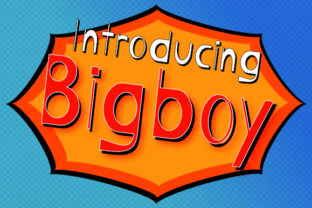
Bigboy isn’t just another display font—it’s a personality on the page. With its exaggerated roundness, playful proportions, and delightfully weird charm, Bigboy stands out in a landscape crowded with safe, predictable typefaces. Designed for impact rather than invisibility, it’s built for moments that demand attention: headlines, posters, packaging, social media banners, and brand statements that refuse to blend in. If your goal is to communicate energy, approachability, or joyful confidence—without sacrificing clarity—Bigboy offers a surprisingly practical solution.
Why Designers (and Marketers) Reach for Bigboy
Many professionals face the same recurring challenge: how to cut through visual noise without resorting to clichés or overwhelming design. Users scroll fast. Algorithms favor engagement. And audiences increasingly tune out anything that feels generic or emotionally flat. That’s where Bigboy steps in—not as a background player, but as a strategic tool for emotional resonance.
Unlike neutral sans-serifs or overly refined serifs, Bigboy carries an immediate tone: friendly, unpretentious, and confidently kooky. It doesn’t ask permission to be seen. That makes it especially useful when your goal is to signal authenticity, creativity, or lighthearted expertise—whether you’re launching a children’s app, rebranding a local bakery, or designing workshop materials for educators who value joy in learning.
Real-World Applications—Where Bigboy Shines
Practicality matters. Here’s how Bigboy delivers measurable value across common use cases:
- Branding & Identity: Small businesses and creative studios often need to differentiate themselves quickly and memorably. Using Bigboy for a logo or primary headline creates instant recognition—especially when paired with a clean, legible body font like Inter or Lato. Think of a vintage record store’s neon sign or a plant-based café’s chalkboard menu: Bigboy adds warmth and character without sacrificing readability at scale.
- Digital Marketing Assets: Social media posts, email headers, and landing page banners benefit from strong visual hierarchy. Bigboy’s generous x-height and open counters ensure it remains clear even at smaller sizes on mobile. Its rounded forms also render beautifully on screens—no jagged edges, no pixelation.
- Educational & Community Materials: Teachers, nonprofit organizers, and workshop facilitators often design flyers, handouts, or slide decks meant to feel inclusive and energizing. Bigboy helps soften formal messaging—making complex topics feel more accessible and less intimidating.
- Product Packaging & Merchandise: On shelves or online thumbnails, distinctive typography builds shelf appeal. Because Bigboy has such strong internal rhythm and consistent weight distribution, it scales well across labels, stickers, tote bags, and apparel—retaining its charm whether printed tiny or blown up large.
How Different Users Can Leverage Bigboy Effectively
Not every designer—or non-designer—approaches typography the same way. Understanding your role and resources helps you get the most from Bigboy:
- Beginners & Non-Designers: Start simple. Use Bigboy for one key element—like a headline or call-to-action button—while keeping everything else typographically calm. Avoid pairing it with other highly decorative fonts. Instead, choose a neutral, highly readable sans-serif for body text. Tools like Canva or Figma include Bigboy in many free font libraries, making implementation frictionless.
- Experienced Designers: Experiment with letter-spacing and weight variants (if available). Slightly tighter tracking can enhance cohesion in short phrases; looser spacing adds breath and playfulness to longer headlines. Consider custom kerning for brand-specific wordmarks—Bigboy’s curves respond beautifully to thoughtful spacing adjustments.
- Developers & Content Creators: When embedding Bigboy on websites, prioritize performance. Host the font locally or use a lightweight subset (e.g., Latin-only characters) to reduce load time. Always define fallback fonts (
font-family: "Bigboy", system-ui, -apple-system, sans-serif;) so content remains legible if the font fails to load.
What to Keep in Mind Before You Commit
While Bigboy brings boldness and charm, smart implementation means honoring its limits:
- It’s not a body font. Its expressive shapes and high contrast between thick and thin strokes make extended reading tiring. Reserve it for headings, logos, quotes, or short bursts of emphasis.
- Contrast is non-negotiable. Pair Bigboy with ample whitespace and strong color contrast—especially against dark or busy backgrounds. Its roundness can visually recede if surrounded by competing elements.
- Test across devices and contexts. A headline that pops on desktop may feel cramped on mobile. Preview how Bigboy behaves at different sizes and weights—not just in design tools, but in real browsers and native apps.
- Consider audience perception. While many appreciate its fun, quirky energy, some conservative industries (e.g., legal, finance, healthcare) may find it too informal for primary branding. In those cases, Bigboy works exceptionally well as a secondary accent—say, in illustrations, data visualizations, or internal campaign materials where personality is welcome.
Getting Started with Bigboy—Actionable Next Steps
You don’t need a full rebrand to begin benefiting from Bigboy. Try these low-effort, high-impact experiments:
- Refresh one marketing asset this week. Swap the headline font on your next Instagram carousel or newsletter banner with Bigboy. Notice how engagement metrics shift over the next 7 days.
- Create a reusable template. Build a Canva or Google Slides template using Bigboy for titles and a clean sans-serif for bullet points. Save it for team-wide use—consistency builds recognition.
- Run a quick A/B test. If you manage a website or email list, test two versions of a CTA button: one in your current font, one in Bigboy. Even subtle shifts in perceived friendliness can lift click-through rates.
- Explore licensing early. While many platforms offer Bigboy for free personal use, commercial projects often require a license. Check the foundry’s terms before finalizing client work or product packaging.
In a world where attention is scarce and authenticity is currency, choosing the right display font isn’t about aesthetics alone—it’s about aligning your visual voice with your mission. Bigboy doesn’t whisper. It grins, waves, and invites people in. And when used thoughtfully, it doesn’t just look good—it helps you connect, convert, and create meaning. Whether you're refining a long-standing brand or launching something entirely new, Bigboy is ready to add boldness, warmth, and memorable charm—exactly where you need it most.