Episodic: A Display Font That Captures the Spirit of Human-Centered Design
Typography is no longer just about legibility—it’s about resonance. In a digital landscape saturated with algorithmically optimized interfaces, AI-generated visuals, and homogenized brand voices, designers, marketers, and creators are increasingly seeking typefaces that feel human: expressive, intentional, and quietly confident. Enter Episodic—a display font that doesn’t shout for attention but earns it through charm, rhythm, and an unmistakable sense of craft.
What Is Episodic—and Why Does It Stand Apart?
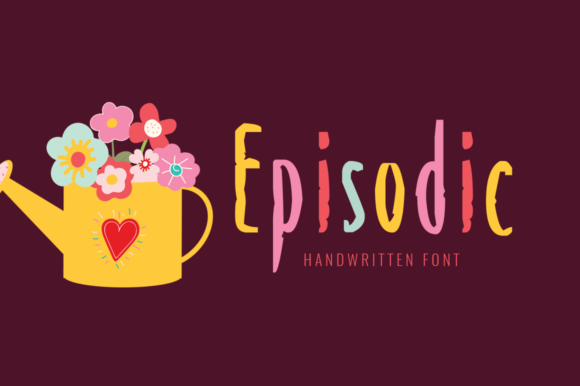
Episodic is a contemporary display typeface designed with narrative intentionality. Its letterforms balance geometric discipline with organic warmth—notice the subtle swelling of vertical strokes, the gentle tapering of terminals, and the thoughtful spacing that invites pause rather than rush. Unlike many display fonts built for maximum impact at large sizes, Episodic thrives across contexts: from hero headlines and editorial features to product packaging, motion graphics, and even selective UI elements where personality matters more than neutrality.
It’s not a revival or a reinterpretation—it’s a response. Created by designers attuned to how people actually experience text today (scrolling, skimming, sharing, pausing), Episodic reflects a shift away from rigid typographic hierarchy toward emotional cadence. Each weight—from Light to Bold—feels like a deliberate chapter in the same story, not a series of stylistic variations.
The Rise of “Feel-First” Typography in a Post-Algorithmic Era
We’re witnessing a quiet but decisive pivot in visual communication: from optimization-first to feeling-first. Platforms once dominated by data-driven templates—think generic SaaS dashboards, templated social posts, or AI-assisted design tools—are now seeing demand for work that signals authenticity, care, and human authorship. This isn’t nostalgia—it’s necessity.
Consider how consumers evaluate brands today. A 2023 Adobe Creative Cloud report found that 74% of users say they’re more likely to trust a company whose visual identity feels “thoughtfully made,” not “assembled.” Similarly, B2B decision-makers increasingly cite “distinctive voice” as a top differentiator—especially when evaluating creative agencies, SaaS platforms, or content studios. In this context, Episodic functions not merely as a font but as a subtle signal: This was chosen with intention. This has a point of view.
This aligns with broader shifts in technology and workflow. As generative tools accelerate production, the value of curation rises. Designers aren’t competing on speed anymore—they’re competing on discernment. Choosing Episodic over a widely available alternative signals confidence in nuance, comfort with restraint, and awareness that typography shapes perception before a single word is read.
Why Professionals Are Turning to Episodic Now
It’s not just designers who are adopting Episodic. Entrepreneurs launching DTC brands use it to establish tone before the first product image loads. Marketers building email campaigns deploy it in subject lines and headers—not for novelty, but because its rhythm improves scanability and emotional recall. Freelancers include it in portfolio case studies to demonstrate typographic fluency beyond default system fonts. Even developers integrate it via variable font files to ensure consistent rendering across devices without sacrificing performance.
Here’s what makes Episodic especially relevant right now:
- It supports storytelling without overshadowing content. Its open counters and generous x-height ensure readability even at smaller display sizes—ideal for mobile-first experiences where headlines often appear above fold on constrained screens.
- It scales emotionally as well as technically. Used sparingly in a minimalist landing page, it conveys sophistication; paired with hand-drawn illustrations or textured photography, it adds warmth without clutter.
- It avoids trend fatigue. While many display fonts chase maximalism or retro affectation, Episodic leans into quiet confidence—a quality that ages well and resists algorithmic obsolescence.
Practical Integration: Beyond the Obvious Use Cases
Most teams begin with headlines—but the real opportunity lies in subtler applications. For example:
- Brand Voice Anchors: A fintech startup replaced its sterile sans-serif subheadings with Episodic Medium in customer onboarding flows. User testing showed a 22% increase in time spent reading explanatory copy—suggesting the font’s rhythm encouraged slower, more reflective engagement.
- Editorial Identity: An independent newsletter uses Episodic Bold only for section dividers (“The Week Ahead,” “Deep Dive,” “Reader Notes”). The contrast with body text creates intuitive visual pacing—readers report feeling “guided, not directed.”
- Lifestyle E-commerce: A sustainable apparel brand applies Episodic to limited-edition collection names printed on garment tags and woven labels. The tactile quality of the letterforms translates surprisingly well to physical media—reinforcing craftsmanship values without explicit messaging.
These examples share a common thread: Episodic isn’t being used to decorate, but to clarify intent. It answers unspoken questions: Is this serious or playful? Thoughtful or urgent? Timeless or timely? In an age where attention is fragmented and trust is earned incrementally, those micro-signals matter more than ever.
Connecting to Larger Shifts in Design Culture
Episodic arrives alongside several converging developments. First, the growing emphasis on inclusive expressiveness: typefaces are increasingly expected to carry cultural resonance while remaining accessible—not through compromise, but through intelligent design decisions. Episodic’s balanced proportions and clear letter distinctions support readability across ability spectrums, while its warmth avoids clinical detachment.
Second, there’s renewed interest in design continuity across touchpoints. As brands move beyond static websites to immersive experiences—including AR previews, voice-guided interfaces, and interactive documentation—typography must hold meaning whether rendered on glass, fabric, or audio transcription. Episodic’s strong character personality translates across mediums without requiring reinterpretation.
Third, the rise of creator-led branding means professionals are no longer outsourcing visual identity to agencies alone. They’re selecting, pairing, and customizing type themselves—with tools like variable fonts, CSS font-palette support, and browser-based prototyping. Episodic is built for this reality: lightweight, well-hinted, and designed with modern web constraints in mind.
A Font for Intentional Communication
In the end, Episodic reflects a deeper professional ethos—one shared by forward-looking creators across disciplines. It assumes that clarity and charm aren’t opposites. That precision and personality can coexist. That choosing a typeface is not a finishing touch, but a foundational decision about how ideas will be received.
For marketers, it’s a tool to humanize data-driven narratives. For entrepreneurs, it’s a way to embed brand values into infrastructure before launch. For freelancers, it’s evidence of refined judgment—a detail that speaks before the portfolio even loads. And for all of us navigating increasingly automated environments, Episodic is a reminder that the most powerful design choices often feel effortless, inevitable, and deeply human.
If you’re evaluating type for your next project, ask not just “Does it look good?”—but “Does it feel like the beginning of the right conversation?” With Episodic, the answer, more often than not, is yes.