Candy: A Joyful Display Font for Whimsical Design
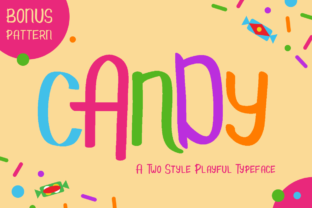
There’s a reason certain fonts instantly lift the mood of a layout—like sunlight breaking through clouds. Candy is one of those rare display fonts that doesn’t just look cheerful; it feels like captured laughter. Designed with playful curves, bouncy proportions, and subtle hand-drawn warmth, Candy draws direct inspiration from the uninhibited joy of children’s laughter—not as a gimmick, but as a design principle. That makes it especially valuable for professionals who need to communicate energy, approachability, or lighthearted authenticity without sacrificing polish.
When Tone Matters More Than Tradition
In branding, packaging, or digital content, tone often determines whether a message lands—or vanishes into the scroll. A bakery launching a new line of artisanal cupcakes doesn’t need a staid serif; it needs visual warmth that invites curiosity and delight. Candy delivers that in a single glance. Its rounded terminals, uneven baseline rhythm, and gentle swelling strokes mimic the organic imperfection of joyful expression—making it ideal for projects where personality matters more than precision.
This isn’t about childishness. It’s about emotional resonance. Consider an early-learning app for preschoolers: using Candy for headlines and interactive buttons creates intuitive visual cues that align with how young children perceive friendliness and safety. Educators and edtech designers report faster engagement when interface text feels “smiling”—not because kids read the font name, but because their nervous systems respond to its soft geometry and open counters.
Where Candy Fits—and Where It Doesn’t
Candy excels in short-form, high-impact roles: logos, posters, social media banners, product labels, greeting cards, and presentation titles. Its strength lies in immediacy—not endurance. Because it’s a display font, it’s not intended for long paragraphs, body copy, or dense UI text. Trying to set a 500-word blog post in Candy would compromise readability and accessibility, especially at smaller sizes or on low-resolution screens.
That limitation is intentional—and useful. It encourages thoughtful hierarchy. Pair Candy with a clean, highly legible sans-serif (like Inter, Lato, or even system fonts like SF Pro or Segoe UI) for body text. This contrast does more than balance aesthetics: it guides attention, improves scannability, and supports inclusive reading experiences—including for users with dyslexia or visual processing differences.
Saving Time Without Sacrificing Intention
Freelancers and small business owners often juggle design decisions under tight deadlines. Choosing a font that communicates tone *immediately* reduces revision cycles. If you’re designing a summer camp brochure and spend 45 minutes testing five serious-looking fonts before landing on something that still feels “off,” Candy offers a fast, confident pivot. Its character is unmistakable—and once aligned with your project’s emotional goal, it streamlines feedback. Clients rarely ask, “Can we make this friendlier?” when Candy is already in place.
Bloggers and content creators also benefit. A recipe site featuring vibrant food photography gains cohesion when headlines echo the same exuberance as the images. Candy adds that layer of expressive harmony without requiring custom illustration or animation—just smart typography choice.
Supporting Creativity Through Constraint
Paradoxically, Candy’s specificity fuels creativity. Because it’s not a neutral tool, it invites intentionality. You don’t use Candy to be “trendy.” You use it when whimsy serves the message—not distracts from it. That focus helps creators avoid decorative overkill. For example, a stationery designer launching a line of birthday cards might test Candy alongside other playful fonts—but quickly discard options that lean too cartoonish or overly uniform. Candy’s charm lives in its gentle asymmetry: the slight tilt in the lowercase “a,” the springy curve of the “g,” the way letters seem to lean into each other like friends sharing a secret.
This nuance makes it especially effective for handmade brands—think ceramic studios, indie perfume labels, or local bookshops hosting story hours. In those contexts, Candy doesn’t shout “fun.” It whispers, “You belong here.”
Real-World Use Cases Across Roles
- Marketers use Candy in limited-edition campaign visuals—like a holiday promo for a toy retailer—where emotional connection drives impulse and shareability.
- Educators incorporate it into classroom posters, reward certificates, or digital lesson headers to reinforce positive associations with learning.
- Small business owners apply it selectively on storefront signage or menu boards to signal warmth and community—especially in service-based spaces like yoga studios or family cafes.
- Bloggers and newsletter writers reserve Candy for subject lines, featured quote graphics, or seasonal email headers—keeping it visible but never overwhelming.
- App developers deploy it sparingly in onboarding flows or celebratory micro-interactions (e.g., “Level Up!” animations), where split-second emotional impact supports user retention.
A Note on Accessibility and Fit
While Candy enhances expressiveness, always verify contrast ratios against WCAG guidelines—especially when used over photos or textured backgrounds. Its lighter weights may require careful color pairing to maintain legibility. Also, consider cultural context: in some professional environments (e.g., legal, financial, or healthcare communications), Candy’s playfulness may misalign with audience expectations—even if technically appropriate. That doesn’t mean it’s “wrong”; it means it’s situational. The most skilled designers know when to reach for Candy—and when a more restrained option better serves trust, clarity, or authority.
Getting Started Thoughtfully
If you’re evaluating Candy for a project, begin with a single, high-visibility application—like a logo lockup or hero banner—and observe how it changes perception. Does it feel more inviting? Does it clarify intent? Does it spark conversation among stakeholders? Those are stronger signals than subjective “I like it” reactions.
Also, explore its language support. While Candy covers Latin-based scripts comprehensively, verify coverage for diacritics or extended characters if your audience includes multilingual readers. And remember: licensing matters. Ensure your use case—whether web, desktop, or app embedding—is covered by the license you acquire. Many foundries offer tiered options, so match scope to need rather than defaulting to the broadest (and costliest) plan.
Final Thought: Joy as a Design Strategy
Candy reminds us that typography isn’t just about legibility—it’s about emotional infrastructure. In a world saturated with sameness, choosing a font rooted in genuine human experience (like the unselfconscious joy of a child’s laugh) adds quiet distinction. It won’t fix weak messaging or poor strategy. But when paired with clear purpose, strong content, and thoughtful execution, Candy becomes more than decoration. It becomes a subtle yet powerful amplifier—one that helps people feel seen, welcomed, and lightly delighted, simply by engaging with your work.