Kiwi Smoothie: A Fruity, Fresh Font for Modern Design Projects
Imagine opening a design file and instantly feeling a burst of energy—like biting into a perfectly ripe kiwi on a sunlit morning. That’s the kind of impression Kiwi Smoothie delivers. It’s not just another display font; it’s a personality-packed typographic choice that brings vibrancy, playfulness, and unmistakable freshness to logos, packaging, social media graphics, and more.
What Makes Kiwi Smoothie Stand Out?
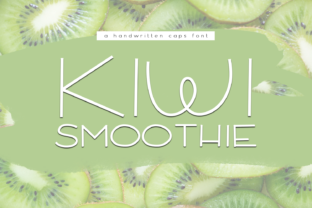
At first glance, Kiwi Smoothie feels familiar—its rounded letterforms and gentle curves echo the friendly warmth of hand-drawn type. But look closer, and you’ll notice its subtle quirks: the slight bounce in the baseline, the juicy weight contrast between thick stems and thin terminals, and those charming little “fruit-inspired” details—like the soft, almost-seed-like dot on the lowercase i, or the gently tapered tail of the y. These aren’t gimmicks—they’re intentional, thoughtful strokes that make Kiwi Smoothie feel alive.
Unlike many trendy display fonts that sacrifice legibility for flair, Kiwi Smoothie balances expressiveness with clarity. Its generous x-height and open counters ensure readability even at medium sizes—say, on a café chalkboard menu or a product label viewed on a phone screen. And because it’s designed as a single-weight, all-caps display font (with optional lowercase support depending on the version), it avoids visual clutter while maintaining strong brand cohesion.
Where Kiwi Smoothie Fits Best
This isn’t a font for body text—or legal disclaimers. Kiwi Smoothie thrives where attention matters most: in moments of first impression.
- Food & beverage branding: Think juice bars, organic snack lines, or tropical-themed cafes. A logo set in Kiwi Smoothie doesn’t just say “healthy”—it evokes texture, taste, and vitality.
- Children’s products and educational materials: Its friendly curves and approachable rhythm resonate with younger audiences—and parents who appreciate joyful, non-sterile design.
- Social media visuals: On Instagram or Pinterest, where scroll speed is high and visual impact is low, Kiwi Smoothie helps headlines pop without shouting. Pair it with clean sans-serifs like Inter or Poppins for smart contrast.
- Festival posters and event branding: Whether it’s a farmers’ market, wellness retreat, or indie music fest, Kiwi Smoothie adds an upbeat, grounded energy—earthy yet energetic.
It’s also gaining traction among indie makers and small studios looking to differentiate themselves in saturated digital spaces. When every competitor uses the same handful of popular script or display fonts, choosing Kiwi Smoothie signals intentionality—and a willingness to stand out with substance, not just style.
Practical Tips for Using Kiwi Smoothie Well
Like any expressive font, Kiwi Smoothie shines brightest when used with restraint and awareness. Here’s how to get the most from it:
- Limit it to one primary role per layout. Use it for your logo, headline, or hero banner—but not all three. Let it breathe. Overuse dulls its charm and weakens hierarchy.
- Pair it thoughtfully. Its fruit-forward personality pairs beautifully with neutral, functional fonts. Try it with geometric sans-serifs (like Montserrat or Manrope) for balance, or with light serif companions (such as Literata or Lora) for contrast that feels intentional—not jarring.
- Respect its scale. While it holds up well at 36–90px for web headers or print posters, avoid using it below 24px in digital contexts. Small sizes can blur its delicate details and reduce legibility—especially on lower-resolution screens.
- Test color contrast carefully. Because of its soft edges and moderate stroke weight, Kiwi Smoothie benefits from strong background/text contrast—think deep navy on cream, or charcoal on off-white. Avoid pairing it with busy textures or low-contrast gradients unless you’re aiming for deliberate subtlety (and have tested readability thoroughly).
How Kiwi Smoothie Fits Into Today’s Creative Workflows
Designers today juggle speed, scalability, and authenticity—all while serving audiences with shorter attention spans and higher expectations for visual coherence. Kiwi Smoothie supports that reality in surprisingly practical ways.
It’s available in modern, web-friendly formats (WOFF2, variable options in some versions), making it easy to embed in websites without bloating load times. Many designers report faster client approvals when presenting concepts with Kiwi Smoothie—not because it’s “safe,” but because it communicates mood and message so clearly upfront. There’s less back-and-forth about “tone” when the typography itself whispers “fresh,” “friendly,” and “thoughtful.”
For motion designers and UI creators, Kiwi Smoothie also works well in animated contexts—its smooth curves translate naturally to easing curves and morphing transitions. A simple hover effect on a button labeled “Try Now” in Kiwi Smoothie feels like a nudge, not a command.
What Designers Say About Choosing Kiwi Smoothie
We spoke informally with several freelance designers and in-house creatives who’ve adopted Kiwi Smoothie across projects—from rebranding a local kombucha company to designing merch for a sustainable fashion startup. Common themes emerged:
- “It helped me move past ‘cute’ into ‘confidently cheerful.’” One designer noted how Kiwi Smoothie avoided the saccharine pitfalls of many playful fonts—its structure kept it grounded, even when exuberant.
- “Clients immediately ‘got’ the vibe—no lengthy briefs needed.” Another shared that presenting a mood board anchored by Kiwi Smoothie cut discovery time nearly in half, especially with non-design-savvy stakeholders.
- “It scales across touchpoints without losing its soul.” From Instagram Stories to printed tote bags, the font retained its identity—something not all display fonts manage without manual tweaking.
Things to Consider Before You Commit
While Kiwi Smoothie is versatile within its lane, it’s worth pausing before licensing or embedding it:
First, check licensing terms. Some versions are free for personal use only—commercial projects (especially SaaS platforms or subscription-based apps) may require an extended license. Always verify usage rights directly with the foundry or marketplace where you source it.
Second, consider language support. Standard releases typically cover Latin-based languages (English, Spanish, French, German, etc.), but may not include extended diacritics or Cyrillic/Greek glyphs. If your project targets multilingual audiences, confirm coverage—or plan for fallback solutions.
Third, ask yourself: does this align with long-term brand evolution? Kiwi Smoothie is distinctive now—but will it still feel fresh and appropriate in two or three years? Fonts with strong character can age gracefully if they’re rooted in timeless qualities (like rhythm, proportion, and warmth)—and Kiwi Smoothie leans into those. Still, avoid locking yourself into overly niche styling unless it’s core to your identity.
A Final Thought: Freshness With Purpose
There’s a reason “kiwi” evokes refreshment—it’s tart, textured, vivid, and quietly complex. Kiwi Smoothie channels that essence without leaning on cliché. It doesn’t try to be everything. It doesn’t chase trends. Instead, it offers something increasingly rare in digital design: a voice that’s both distinctive and dependable.
Whether you’re launching a new product, refreshing a tired brand, or simply searching for a font that makes your audience pause and smile—Kiwi Smoothie is more than a stylistic choice. It’s a signal: that care, craft, and a little fruity joy still matter.