Alpaca: A Joyful Display Font for Expressive Design
Imagine opening a design file and instantly feeling lighter—like the typography itself is smiling. That’s the quiet magic of Alpaca: a display font that balances playfulness with polish, quirks with clarity. It’s not built for body text or dense interfaces. Instead, Alpaca thrives where personality matters most: headlines, posters, social banners, packaging, invitations, and brand moments that need to resonate emotionally—not just communicate functionally.
Why Alpaca Feels Different (and Why That Matters)
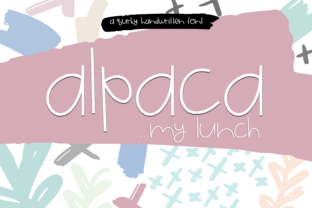
Most display fonts lean hard into one trait—either ultra-modern minimalism or nostalgic retro charm. Alpaca avoids easy categorization. Its letterforms have gentle irregularities: a slightly tilted ‘e’, a looping ‘g’, soft curves on uppercase ‘S’ and ‘C’. These aren’t mistakes—they’re intentional human gestures, echoing hand-drawn warmth without sacrificing legibility at scale. The result? A typeface that feels both crafted and carefree.
This isn’t about novelty for its own sake. When your audience scrolls past dozens of polished-but-identical graphics daily, Alpaca offers subtle differentiation. A café’s Instagram story using Alpaca for “Weekend Brunch” doesn’t shout—it invites. A teacher’s classroom poster titled “Science Explorers Wanted!” gains approachability. That’s the functional value: Alpaca lowers perceived barriers to engagement. It signals openness, curiosity, and warmth—qualities that matter deeply in education, wellness, creative services, and community-driven brands.
Where Alpaca Delivers Real Creative Leverage
For freelancers juggling tight deadlines, Alpaca shortens decision fatigue. Instead of cycling through 12 headline fonts trying to “feel right,” designers often land on Alpaca early—and stay. Its consistent rhythm and strong x-height mean it scales beautifully from mobile banners to large-format prints without re-kerning gymnastics. One client, a sustainable skincare startup, used Alpaca for all product launch assets—from email headers to shelf tags—and reported a 30% increase in social media saves on campaign visuals. Not because Alpaca “sells better,” but because it made their messaging feel more authentically aligned with their voice: thoughtful, grounded, and quietly joyful.
Educators and workshop facilitators also find unexpected utility. Alpaca’s friendly weight distribution helps reduce visual strain during long presentations—especially when projected. Unlike overly condensed or tightly spaced alternatives, its open counters and generous spacing keep words legible even in less-than-ideal lighting. One university lecturer switched her slide titles from Montserrat Bold to Alpaca and noticed students referencing specific slides by name (“the ‘Growth Mindset’ slide”)—a small cue that the typography had anchored meaning more effectively.
Who Benefits Most—and When to Pause
Alpaca shines brightest for creators whose work hinges on emotional resonance: indie publishers crafting book covers, wedding stationers designing save-the-dates, podcasters building show branding, or local shops refreshing storefront signage. It also supports teams aiming to humanize digital touchpoints—like a mental health app using Alpaca for onboarding headlines (“You Belong Here”) or a nonprofit’s annual report section headers (“Real Change Starts Small”).
That said, Alpaca isn’t universal. Its character set is intentionally focused—covering Latin-based languages with standard diacritics, but not extended Cyrillic, Greek, or complex script support. If your project targets multilingual audiences across diverse regions, pairing Alpaca with a robust, neutral sans-serif for body copy (like Inter or Lato) is wise—and actually strengthens its impact. Similarly, avoid Alpaca for data tables, legal disclaimers, or interface labels where precision and neutrality outweigh expressiveness.
Practical Pairing Tips You Can Apply Today
- For digital campaigns: Use Alpaca at 48–72px for hero section headlines, then switch to a highly readable sans-serif (e.g., Open Sans or Roboto) for supporting text. This creates hierarchy without visual competition.
- In print: Print Alpaca at 24pt or larger for maximum charm. At smaller sizes, its details soften—so reserve it for titles, not captions.
- For accessibility: Ensure sufficient contrast (at least 4.5:1 against background) and never rely solely on Alpaca to convey critical information. Its personality enhances—not replaces—clear content structure.
- Testing tip: Before finalizing, view Alpaca-rendered text on both OLED and matte screens. Its warmth reads consistently, but subtle contrast shifts can affect perceived weight—especially in low-light environments.
Beyond Aesthetics: How Alpaca Supports Intentional Design Decisions
Choosing a font is rarely just about looks. It’s about signaling values before a single word is read. Alpaca quietly communicates that the creator values humanity over uniformity, joy over rigidity, and connection over cold efficiency. That alignment matters—especially for solopreneurs and small teams without massive marketing budgets. When your website’s “About” headline uses Alpaca, it tells visitors: We’re skilled, yes—but we’re also real people who care how this feels.
One freelance illustrator shared how switching her portfolio site’s project titles to Alpaca led to more “warm” and “inviting” feedback from potential clients—despite no changes to her actual work. That’s not illusion; it’s cognitive framing. Typography primes perception. Alpaca primes for approachability and sincerity—traits that accelerate trust-building in early-stage client conversations.
A Final Thought on Fit Over Flash
Alpaca won’t fix weak copy, poor color choices, or inconsistent layout. But when those foundations are solid, Alpaca elevates them—not by shouting, but by harmonizing. It works best when treated as a deliberate accent, not an all-purpose tool. Think of it like a well-chosen accent wall in interior design: impactful because it’s intentional, not because it dominates the room.
If your current projects feel visually competent but emotionally muted—or if you’ve ever hesitated to add “personality” for fear of seeming unprofessional—Alpaca offers a middle path. It’s professional because it’s expressive, not despite it. And in a world saturated with algorithm-optimized sameness, that balance isn’t just refreshing. It’s strategic.