Forma Stripes: A Futurist Typeface Built for Clarity and Impact
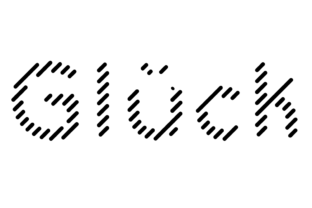
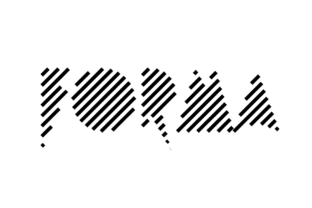
Forma Stripes stands apart—not because it shouts, but because it articulates with precision. Designed as a distinct variant within the broader Forma family, this typeface draws deliberate inspiration from Italian futurism: its rhythm is kinetic, its geometry intentional, and its striped letterforms are both structural and expressive. Unlike decorative stripe fonts that prioritize novelty over function, Forma Stripes balances visual distinction with typographic integrity. It’s not merely a stylistic experiment—it’s a tool engineered for legibility at scale, hierarchy in motion, and identity with momentum.
Where Forma Stripes Fits in the Typographic Landscape
Most display typefaces fall into one of two camps: those optimized for immediate attention (often at the cost of readability in extended use) and those built for neutrality and endurance (sometimes at the expense of personality). Forma Stripes occupies a narrower, more considered middle ground. Its defining feature—subtle, rhythmic vertical striations within letterforms—emerges clearly at sizes above 36pt but recedes thoughtfully at smaller sizes, where the underlying skeleton of the Forma superfamily ensures consistency and clarity. This duality makes it unusually versatile: it works as a bold headline in a digital campaign, a refined title treatment in editorial design, or even a subtle accent in branding systems that demand cohesion across print and screen.
Design Integrity and Technical Execution
The stripes in Forma Stripes aren’t applied as overlays or textures—they’re baked into the glyph construction. Each character’s internal segmentation follows proportional logic tied to stroke weight, x-height, and counter space. That means the effect remains stable across weights (Light through Bold), retains optical balance in all caps and mixed case, and scales predictably from billboard to mobile interface. Kerning pairs have been adjusted to accommodate the added visual density of the stripes without compromising spacing integrity. Test renders across high-DPI displays and CMYK print proofs confirm minimal ink spread or pixelation—even in fine-detail applications like engraved stationery or laser-cut signage.
Unlike many “futurist-inspired” fonts that rely on exaggerated angles or forced asymmetry, Forma Stripes grounds its energy in restraint. The stripes run parallel to the vertical axis, never slanting or tapering. This discipline prevents visual fatigue during scanning and supports rapid recognition—critical when headlines appear in fast-scrolling feeds or time-constrained presentations.
Real-World Performance Across Mediums
In practice, Forma Stripes excels where contrast, context, and control intersect. A boutique architecture studio used it for project nameplates on exhibition panels: the stripes echoed the rhythm of structural beams in their renderings while remaining legible from three meters away. An independent newsletter adopted it for section headers—paired with Forma Text for body copy—creating clear visual pacing without sacrificing scannability on iOS mail clients. A university press applied it selectively to cover titles for monographs on 20th-century design, where its historical resonance reinforced thematic cohesion without veering into pastiche.
It performs less effectively in low-contrast environments (e.g., light gray text on white backgrounds) or when set too tightly—stripes can visually merge, reducing character distinction. And while its Bold weight holds up well in large-scale applications, the Light and Regular weights are best reserved for controlled settings: think curated landing pages or premium packaging—not dense UI menus or data tables.
Who Benefits—and When
Forma Stripes serves professionals who need a typeface that communicates intentionality without overselling. Marketers launching a rebrand around innovation or forward motion find its futurist roots credible—not gimmicky—especially when paired with minimalist layouts. Educators designing course materials on design history or visual culture gain an authentic typographic reference point that sparks discussion about form, function, and movement. Freelance designers building brand identities for tech-adjacent startups appreciate how it signals modernity while avoiding the coldness of ultra-thin sans-serifs or the dated connotations of retro-futurism.
Small business owners in creative sectors—gallery owners, ceramic studios, independent publishers—also benefit. Its restrained expressiveness allows it to elevate modest budgets: a single-weight implementation (e.g., Bold only) delivers strong visual identity across business cards, Instagram posts, and website headers without requiring extensive font licensing or custom development.
Workflow Integration and Practical Considerations
Forma Stripes ships with full OpenType support, including stylistic alternates, figure sets, and language coverage for Western, Central, and Southeastern European scripts. It’s available through reputable foundries with standard web font hosting (WOFF2, variable font options included), meaning no self-hosting complexity for developers. For Figma or Adobe Creative Cloud users, it installs cleanly and behaves predictably in auto-layout frames and paragraph styles.
One realistic limitation: it’s not a system font. You won’t find it pre-installed on most devices, so web use requires proper loading strategy and fallback planning. We recommend pairing it with its sibling Forma Text—or a neutral, highly legible sans-serif like Inter or Source Sans Pro—as a robust fallback stack. Also worth noting: the striped aesthetic carries more weight in editorial or experiential contexts than in transactional interfaces (e.g., checkout flows or admin dashboards), where clarity and speed outweigh stylistic nuance.
Long-Term Value and Strategic Fit
Typefaces age differently. Some feel immediately current but fade quickly; others gain authority with time. Forma Stripes leans toward the latter. Its connection to Italian futurism isn’t superficial—it reflects a lineage of design thinking that values purposeful form, spatial awareness, and human-centered progression. That gives it staying power beyond trend cycles. Teams evaluating type for multi-year brand guidelines report higher confidence in Forma Stripes’ longevity compared to fonts built solely around algorithmic novelty or social-media virality.
Its value also compounds with thoughtful usage. Because the stripes function as a compositional device—not just decoration—they invite intelligent pairing. Try aligning stripe intervals with grid columns in layout software. Use stripe density to imply hierarchy: Bold for primary headers, Regular for subheads, and Forma Text for body. These aren’t prescriptive rules, but observed patterns among designers who’ve integrated Forma Stripes sustainably across multiple projects.
A Final Observation
If you’re weighing Forma Stripes against other display sans-serifs, consider not just how it looks—but how it behaves under constraint. Does it maintain voice when scaled down? Does it support your content structure—or compete with it? Does it reflect a stance you want associated with your work: measured, progressive, grounded? Forma Stripes doesn’t promise versatility in the sense of “works everywhere.” Instead, it delivers reliability where it matters most: in moments when typography must do more than label—it must orient, energize, and endure. For creators who treat type as infrastructure rather than ornament, that distinction is rarely trivial.