Lovelorn: A Romantic Display Font with Energy
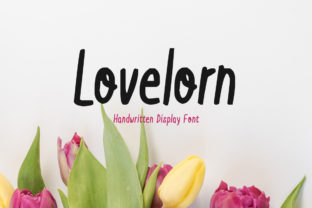
Lovelorn isn’t just another script font—it’s a deliberate spark of warmth and motion, designed to carry feeling without sacrificing clarity. With its confident strokes, subtle bounce, and expressive contrast, Lovelorn balances romantic charm with modern usability. It’s not overly ornate, nor is it restrained to the point of sterility. Instead, it invites attention while staying legible at larger sizes—making it especially effective where emotion and intention need to land quickly.
Why Lovelorn Stands Out Among Display Fonts
Many display fonts lean heavily into either elegance or playfulness—but Lovelorn does both, thoughtfully. Its letterforms have rhythm: a gentle tilt in the ‘a’, a lifted terminal on the ‘t’, a soft swell in the ‘o’. These aren’t arbitrary flourishes—they’re crafted decisions that give the typeface personality *and* consistency. Unlike scripts that rely on ligatures or excessive swashes to feel distinctive, Lovelorn builds character through proportion, spacing, and controlled energy.
That energy matters. In digital spaces where users scroll fast and decide in seconds, Lovelorn helps your headline or logo feel intentional—not just decorative. It communicates care, sincerity, and approachability—qualities that resonate across industries from wedding planning to indie publishing, boutique branding to mindful education.
Creative Uses That Go Beyond the Obvious
Start with what Lovelorn does best: short-form, high-impact text. Think event invitations, book covers, podcast episode titles, or Instagram story headers. Its strength lies in context where brevity meets emotional weight—so “You’re Invited” carries more than information; it carries tone.
- Branding for small creative businesses: A ceramicist might use Lovelorn for her shop name on packaging and social bios—soft enough to reflect handmade care, bold enough to stand out on a shelf or feed.
- Educational materials with heart: An educator creating printable reflection journals or mindfulness prompts can use Lovelorn for section headers—giving structure warmth without undermining seriousness.
- Digital storytelling: Bloggers writing about relationships, personal growth, or creative healing often pair Lovelorn (for titles) with a clean sans-serif like Inter or Lato (for body text). The contrast supports readability while letting the voice shine.
It’s also surprisingly adaptable in layered design. Try setting Lovelorn in all caps with generous tracking for a modern, airy poster layout—or use it in sentence case with tight leading for an intimate zine cover. Because its x-height is generous and its descenders are modest, it pairs well with both geometric and humanist typefaces—no forced harmony required.
How Different Users Can Apply Lovelorn Thoughtfully
Designers appreciate how Lovelorn avoids trend dependency. It doesn’t mimic handwriting or chase retro revivalism—it occupies its own quiet space. When building a brand system, use it strictly for primary headlines or logos, then define clear hierarchy rules: e.g., “Lovelorn only at 36pt+, always with 150% line height, never in paragraphs.” Consistency here prevents visual fatigue and reinforces recognition.
Marketers and small business owners benefit most when they treat Lovelorn as a tone-setter—not a solution for every text block. Use it in email subject lines (sparingly), hero banners, or limited-edition product names. Avoid using it for pricing, disclaimers, or instructions. Let it do the emotional lifting so other elements can stay functional and clear.
Bloggers and content creators find value in its versatility across platforms. On Substack or Ghost, Lovelorn works beautifully in post titles and newsletter headers—especially when exported as SVG or embedded via @font-face with fallbacks. On Instagram, it translates well to static quote graphics (just ensure contrast meets accessibility standards: minimum 4.5:1 against background).
Educators and workshop facilitators can use Lovelorn to signal transition points in handouts or slide decks—e.g., “Pause & Reflect”, “Try This”, or “What Feels True?”. Its warmth lowers perceived barriers to engagement, especially with adult learners who may associate formal typography with distance or authority.
Practical Tips for Stronger Results
First: test legibility early and often. Lovelorn shines at 28–72pt in print and 32–64px on screen—but loses impact below 24px. Never force it into captions, footnotes, or mobile navigation menus. If you need smaller expressive text, consider a companion sans-serif with similar stroke weight or rhythm instead.
Second: mind your color and contrast. Lovelorn’s energy reads best against uncluttered backgrounds. Deep navy on ivory, charcoal on warm white, or muted terracotta on cream all let its shape breathe. Avoid busy textures or low-contrast combos like light gray on off-white—even if technically legible, they mute its expressive intent.
Third: limit variation. Lovelorn includes one weight (regular) and no italics or condensed variants. That’s a feature—not a limitation. Embrace its singularity. If you need emphasis, use size, spacing, or color—not faux-bold or distortion. This restraint actually strengthens brand cohesion over time.
Real Projects Where Lovelorn Made a Difference
A Portland-based florist redesigned her seasonal lookbook using Lovelorn for section titles (“Spring Arrangements”, “Dried & Dreamy”) alongside archival photography. The font’s soft curves echoed petal edges without competing visually—readers reported feeling “invited in,” not dazzled.
An online course on empathetic communication used Lovelorn for module headers (“Listen First”, “Name the Feeling”, “Hold Space”). Learners noted the typography felt “human, not clinical”—a subtle but meaningful cue that aligned with the course’s values.
A self-published poetry chapbook featured Lovelorn on the cover and part dividers only—never in poems themselves. Readers described the effect as “a quiet gesture before silence,” reinforcing the work’s contemplative pace.
Final Thought: Use Lovelorn Like a Conversation Starter
You don’t need to overthink Lovelorn—you need to trust its clarity and commit to its boundaries. It’s not meant to fill space or solve layout problems. It’s meant to say something specific, warmly, and memorably. Whether you’re naming a new product, launching a newsletter, designing a wedding suite, or simply choosing a font that feels like *you*, Lovelorn offers grounded elegance—not flash, not fuss, just presence.
Let it lead where tone matters most. Keep everything else supportive, simple, and intentional. That balance—between energy and restraint, romance and function—is where Lovelorn earns its place in real creative work.